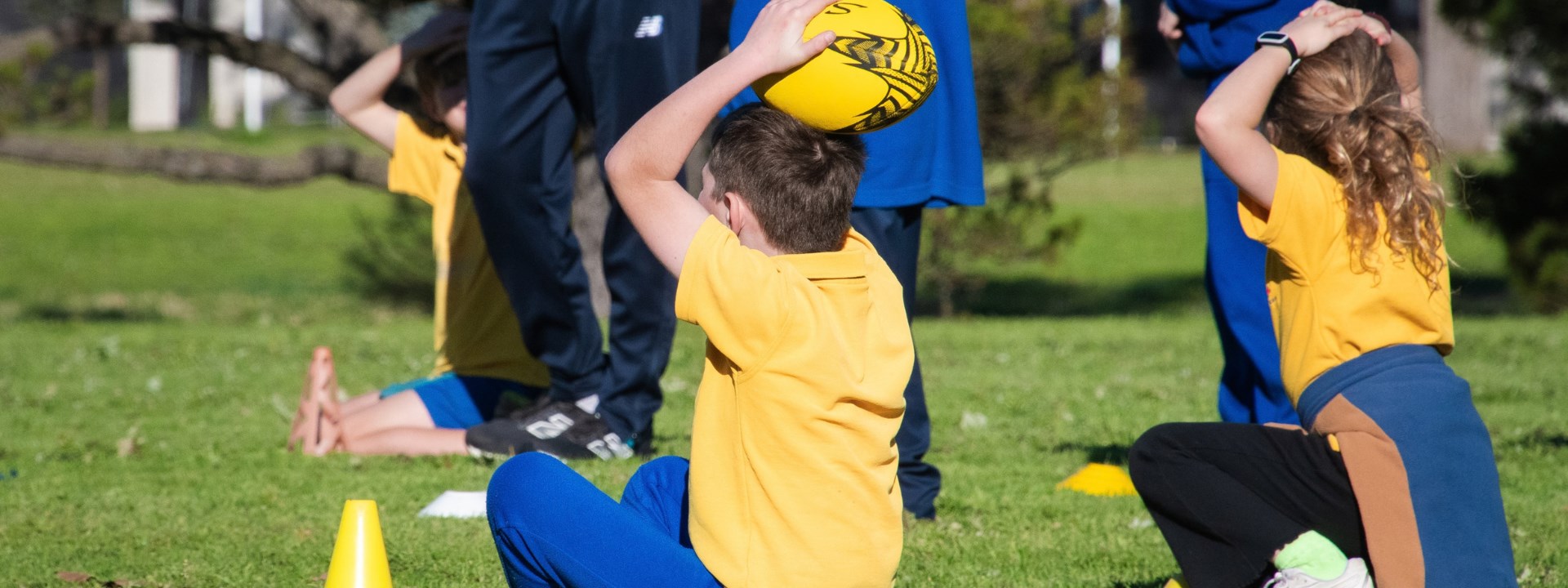
In today's classrooms, finding ways to keep students engaged, focused, and ready to learn is more important than ever. One simple yet highly effective strategy is the use of brain breaks. These short bursts of physical activity help interrupt prolonged sitting, re-energise the mind, and support students' overall wellbeing.
Research shows that regular movement breaks can improve attention, concentration, on-task behaviour, and engagement. They can also reduce mental fatigue and help students return to learning with renewed focus and energy. When brain breaks are enjoyable, inclusive, and engaging, they can positively influence motivation and create an environment where students are more receptive to learning.
Why Touch Football?
Touch Football provides the perfect foundation for effective brain breaks because it combines physical activity with cognitive and social learning opportunities.
Whether students are running, evading, passing, catching, or changing direction, they are engaging in movements that develop coordination, balance, motor planning, and body awareness. Many of these activities involve cross-lateral movement patterns, helping students connect movement with learning and supporting the development of physical literacy.
The benefits extend far beyond physical activity. Touch Football encourages students to:
- Make quick decisions
- Solve problems under pressure
- Communicate effectively
- Work collaboratively with others
- Anticipate outcomes and adapt to changing situations
These skills are valuable not only in sport but also in the classroom and throughout life.
Moving Minds Through Movement
When incorporated as short, structured brain breaks, Touch Football activities can help students reset their focus, build positive social connections, and return to learning ready to engage.
From a quick passing challenge between lessons to a short-sided game on the playground, Touch Football offers endless opportunities to bring movement into the school day. By combining fun, teamwork, problem-solving, and physical activity, these brain breaks support both wellbeing and learning outcomes while creating positive and active classroom environments.
Teacher Ambassador Challenge
As part of our Teacher Ambassador Program, we're challenging teachers to intentionally incorporate Touch Football brain breaks into their daily routines. This could be anything from a two-minute classroom passing activity to a longer game-based movement break outside.
We've reached out to members of our Touch Football community to share how they use Touch Football-inspired activities throughout their day, and we'll be featuring some of their ideas below.
School of Sport Education Northern Territory (SSENT) Principal Tim East provided us with these fantastic ideas
Head/Shoulders/Knees/Cone
Two players either side of cone. Coach calls the object and players touch them with two hands. When cone is called they try and grab the cone to win. Substitute the cone with a ball.
Play the Ball Tag
Like typical tip but the players who are "in" have a ball. They 'initiate the touch' on someone which them makes that player "in” when they touch them they play the ball and the tipped player picks it up and then runs to tip someone else.
Pass Touch / Try
Two players pass the ball back and forward. When the whistle is blown the player with the ball turns and runs to score a try. The player without the ball chases them to tip them before they score.
Number Game
Set out a number of balls spread out in a playing zone. Players move freely. Coach blows a whistle and calls a number e.g. 5. Kids get into groups of 5 and run to a ball. They pick it up and have to pass it 10 times before putting it down and rejoining the playing field.
Silent Ball
Modify typical silent ball into the classroom using a soft rugby ball
Dodgeball
Using touch footys, students can't be hit on the bounce. Typical dodge ball rules. Can add a challenge by setting up targets to be hit such as cones with another ball balancing on it.
10 pass - two teams in a small zone
Players cant run with the ball. Must pass it around their team 10 times to get a point. Opposition can intercept, knock down. When ball goes to ground it changes over. Netball style distance between offence/defence. Reduce to 5 pass for lower groups.
Progression on Hills and Valleys
Typical hills and valleys - 10 markers flipped over / 10 markers normal. Two teams. Hills trying to make them normal, valleys trying to flip. After they play this I progress to having all markers normal. Students run around the zone and need to change direction every time they reach a marker (building on stepping) then I change it up and every player runs around, they need to step over a marker and touch the marker as they step over (practicing a play the ball). They count ever marker they touch and then try and beat it.
Clap pass - group stands in a circle.
1 ball gets passed around - players clap before receiving. If they clap but the ball doesn't go to them they are out and bob down (I don't like players being out so I generally get them to run around the circle and once they get back to their sport they join back in or they bob down and when the next person gets out they are back in and it alternates.)
Share Your Ideas
Some of the best ideas come from teachers who are finding creative ways to keep students active and engaged every day.
If you have a favourite Touch Football brain break, movement challenge, or classroom activity, we'd love to hear about it. By sharing ideas across our community, we can continue to support student focus, maximise learning opportunities, and create more active learning environments for all.
Have an idea to share? Email our Schools Team at Touch Football Australia and help inspire fellow educators across the Touch Football community
Are you a part of our Teacher Ambassador Program? If not sign up today for more exclusive content.